

TW: depression
Also, thank you to Brooke for encouraging me to publish this post, with and without meaning to. Your work is so unabashedly honest, and I’m not sure I would have gotten over the “cringe” of sharing this with others if I hadn’t read it, even though that’s kind of the point of this whole piece.
A week ago, at one of our coffee shop coworking sessions, a friend asked me and another friend if we were going to the No Kings March that Saturday.
“I’m kind of jaded,” I said, the no guiltily implied. “It’s hard for me to see the point these days.”
These days was an accidental double entendre, referring sort of to our current sociopolitical climate but mostly to how I’ve been lately. In February I spent my first-ever 72-hour stint at a psychiatric hospital, a fact I am not particularly shy about, less because I’m eager to challenge mental health stigma than because pretending I’m fine is a lot more painful than allowing people to judge me. (So far, though, I don’t believe they have.)
In the week or so immediately following my hospital stay, with a $2,600 facility bill freshly loaded onto my credit card (fuck the American health insurance system for making my monthly premium basically useless, but at least I’m earning travel points, I guess), I found it extremely difficult to face nearly anyone I knew. Feigning happiness or general stability felt frustrating and stupid and also kind of heartbreaking, especially because many of my closest pals were celebrating major life events at the same time that I was exploring a new low. I felt torn between what felt like two very distinct options: act as though the hospital visit was a weird and quirky fluke and everything was on the up-and-up, or allow myself to be honest about the fact that progress—in emotional well-being, in familial relationships, in allowing oneself to call something “trauma” when it could have been so much worse—was apparently not linear.
As someone who’s generally embarrassed to have needs, I am more familiar with the first option. But when life hands you a wake-up call in the form of a $2,600 EOB, you listen.
In December, when the wound that has been afflicting me was newly reopened, I began working on a novel. In a way that contrasts sharply with my debut (read: only) book, it was literary and melancholy and set in a real place, where I have memories and photographs and routines. I made Pinterest boards for the thing, told my writer friends I was working on something new. It was only once I started to sketch out an outline that I realized the story too closely mirrored my own. This wasn’t just a self-insert; it was one step away from a memoir.
Sometimes, I think my writing inadvertently attempts to take something ugly and tie it up with a pretty little bow. I was sad, but I’m happy now. I was conflicted, but I’m decided now. I was insecure, but I’m confident now. It is difficult for me to exist transparently in a difficult or unflattering state because I hate pity; I want people to know that I not only can make it through this (whatever “this” happens to be at a given time) but already have.
But I can’t do that right now. I can’t take a situation with a parent that continues to break my heart and turn it into a story that isn’t devastating. My options, then, are to put this idea on hold or write a depressing novel that never really succeeds at wringing out its grief.
Though the project still interests me for reasons that aren’t entirely autobiographical (I am a setting-first writer and setting a project in 2008 excites me, mostly because I can sneak in references to my favorite recession pop hits), I’ve set it aside. There is value in creating fiction from things you personally have experienced, but that feels too ambitious right now. Everything does. Pitching stories, promoting my book, giving my office the deep clean it’s needed for who knows how long. What little energy I have must be carefully spent, and attempting to achieve anything at all will stretch the budget.
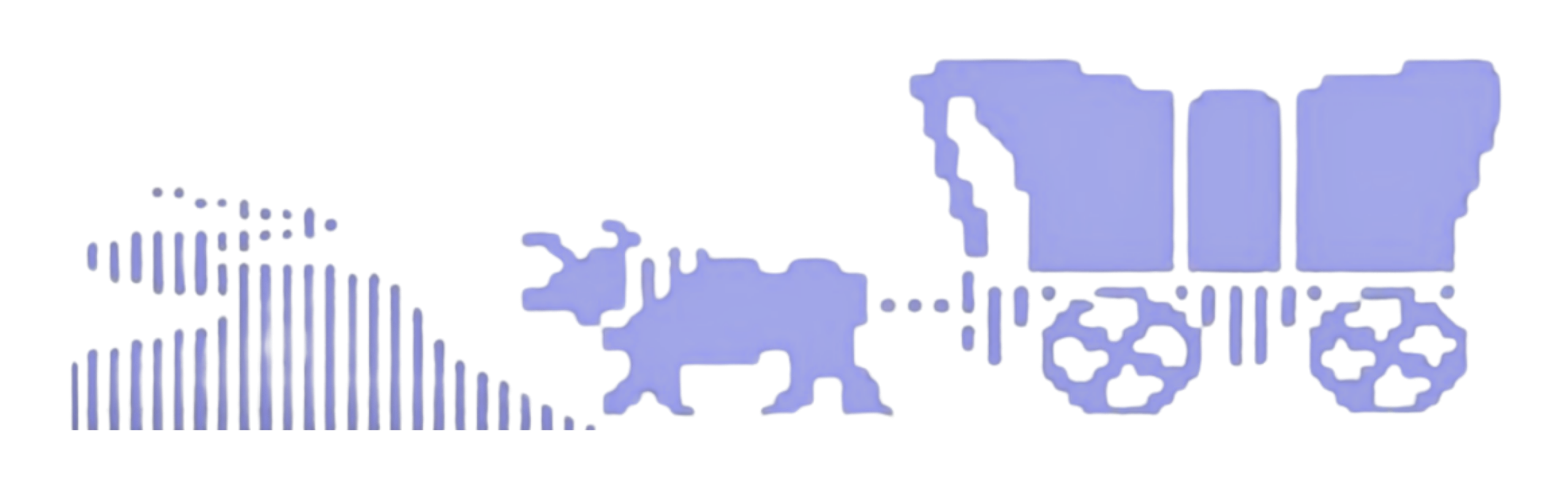
Lately I’ve been playing the 2021 remake of The Oregon Trail1 on the Nintendo Switch. The party from my most recent playthrough included a farm girl named JILL, who was both KIND and PUGNACIOUS. She was handy when we encountered other families on the trail or when it came time to hunt, but she was prone to low morale. Her party was always having to pull out a harmonica or stop at a campfire to tell stories, lest she grow too bummed (FORLORN) and jump ship (er, wagon).
“Ugh,” I griped to my boyfriend when we were gaming separately-but-together over the weekend, “this bitch is always FORLORN.”
Don’t worry—this is not me making a cute little analogy about how like Jill, we all get a bit sad sometimes when I really mean we all have a terrifying mental breakdown sometimes, after which we need weeks, maybe months (who knows!), to recover. What I will say, though, is that after a lifetime of playing The Sims, I thought it was genius of The Oregon Trail to make every gameplay choice both advantageous and costly, in one way or another. You can stop at a campfire to tell stories all night to boost your party’s morale, but you’ll lose hours of valuable travel time. You can tightly ration your food to make it last longer, but it’ll lower morale. You can hunt, but it’ll exhaust even your best marksman.
I felt kind of stupid for thinking this was a clever game development strategy when I realized that’s how real life works, too. And, like, of course it is. I can get stronger by adding an extra workout to my weekly regimen, but that’ll make me tired, making the next workout more difficult. I can save money by eating leftovers at home, but sharing some takeout with my boyfriend would be more fun. And I could tell those around me that I’m feeling fine now while pushing myself to write or pitch or promote, but it might take longer for me to feel better if I do.
In an effort to avoid feeling even more FORLORN, I’ve been trying to strike a balance between participating in fun, non-achievement-based activities for the sake of levity and indulging my sadness when it needs to be felt. In addition to playing The Oregon Trail, I’ve been logging many an hour on Planet Zoo2, working on my garden, hanging out with my friends’ cute little baby, and attempting to improve my cake decorating skills. But I’ve also been doing a lot of crying—like, a lot—and trying to convince myself that when I talk to people about my feelings, they probably (hopefully?) won’t think, Ugh, this bitch is always sad. I’m not trying to be melodramatic, after all. I’m just being truthful, and if there’s anything I’ve learned over the past couple of months, it’s how dangerous it can be to keep the truth to myself.
I hope that when the time comes for me to weave true grief and sadness and anger into my fiction, my sincerity—my lived experience—will shine through. But I’m not quite there yet; it takes time to build up the hope and the confidence necessary to make that type of work successful. Sometimes the feelings just need to be felt before they can be made into something new.
This is the second entry in the as-yet unnamed blog section of Creativity Under Capitalism, where I publish occasional personal and/or lifestyle-oriented posts. If that’s your thing, I’m happy to have you! If it’s not, you can unsubscribe from this section without losing your subscription to Creativity Under Capitalism.
I have limited experience with earlier versions of The Oregon Trail, but I highly recommend the 2021 rendition! The gameplay is really fun, and the developers partnered with indigenous groups to represent the effects of colonization on Native peoples, which is cool.
If you were a Zoo Tycoon kid in the 2000s, you NEED to play Planet Zoo, full stop.
So many things in this article resonate with me. The struggle to talk about my needs let alone ask for help reaching them, the parental grief that tends to hit so hard it knocks the wind out of me, the desire to turn those feelings into something else and the realization that I can't yet... It's good to know I'm not the only one. I hope it feels good to you, too, to know you're not the only one. Thank you for daring to be cringe—I'm so grateful you shared this piece!!
I just fucking love this article so much. Every single little word. Thank you so much for being vulnerable and posting this because I truly think the world needs to hear about what the world looks like when you’re struggling with FORLORN.
The comparison to Oregon Trail genuinely made my jaw drop because wow you’re so right, what a perfect analogy. We want to be every single thing all at once, but we just can’t.
Love you so much as you do what you need to to help your brain right now. And also FUCK THE AMERICAN HEALTHCARE SYSTEM but the points comment was so real.