

How to set goals you'll actually achieve
(without stressing yourself out along the way)

You’re reading Creativity Under Capitalism, a free biweekly newsletter about reclaiming and sustaining creative joy under tricky socioeconomic circumstances. I’m Adrianna, a freelance journalist and creative writer based in Phoenix, AZ.
My debut novella, Those Lights at Night—about a desert town that fakes alien abductions to attract tourists and the suspicious disappearances that send it into a tailspin—is now available in audio and ebook format! If you’re enjoying Creativity Under Capitalism, consider picking up a copy (perhaps as a holiday gift?) or buying me a coffee to make my day!

New Year’s resolutions are surprisingly controversial. For some of us, they offer an exciting framework through which to differentiate the years and seek self-improvement; for others, they’re a reminder of the ways in which such improvement is demanded of us, constantly and often unthinkingly, by a system that won’t let us rest or accept ourselves the way we are.
While I can understand both perspectives, I have a few critiques of this either-or view. The first is that rest is just as valid a pursuit as anything else and can therefore be a goal or resolution, as it will be for me in 2026. The second is that pursuing one form of lifestyle change or self-improvement does not have to mean throwing rest or self-acceptance out the window. The third is that, well, this doesn’t have to be anything serious if you don’t want it to be. My BFF’s New Year’s resolution one year was to use more obscure emojis, for goodness sake.
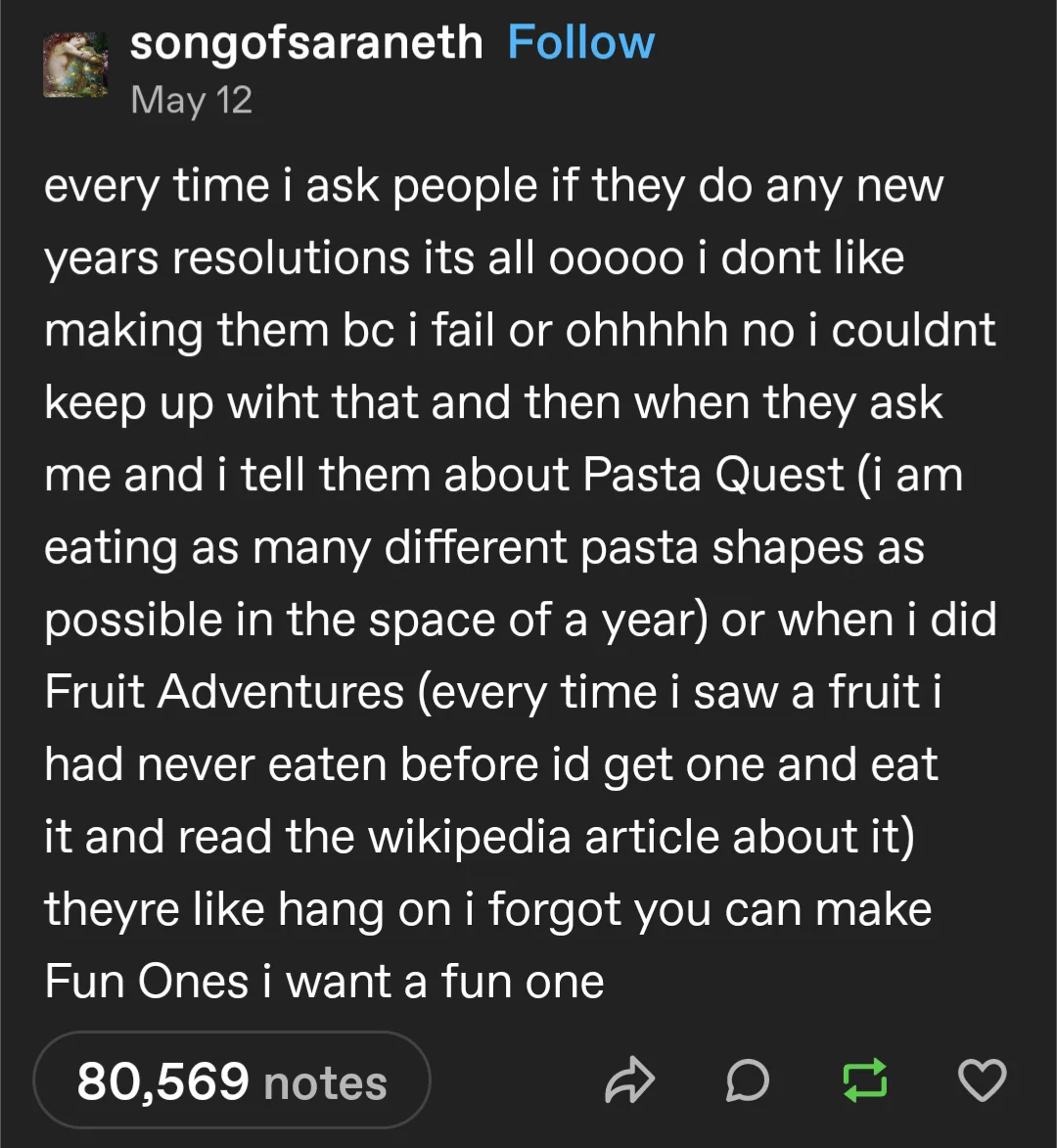
Another reason I see people begrudging New Year’s resolutions, though—as this excellent Tumblr post alludes—is because they’ve failed at them in the past, and they’re afraid of failing again.
As an enthusiastic New Year’s Resolutioner™ who has never not met a resolution she’s set for herself (as an adult, anyway), I’d like to share some tips on how you can set goals you’ll actually achieve in 2026. Try them out, and I bet that this time next year, you’ll have something to gloat to your friends about.
Be selective.
I’m convinced that the reason many people fail at their resolutions year after year is because of how easy it is to believe that next year will be The Year They Get Their Shit Together. This is a tempting belief that I, too, have to ward off with a stick shaped vaguely like a sword: With virtually no plans on the calendar yet, the new year looks like something I’ll glide right through, with no logistical or emotional disruptions to hinder my progress.
The key word, of course, is “yet.” Almost as soon as the clock strikes midnight on December 31, most of us will experience some assortment of friends wanting to arrange a group trip, kids wanting to join new extracurriculars, local organizations asking for volunteers, bosses pressuring us to do overtime, fresh freelance opportunities dominating our lunch breaks, and so on. (That’s not to mention the political stressors, interpersonal strife, medical crises, et cetera that inevitably dot everyone’s life.)
The calendar will fill up, and fast. Suddenly, 2026 won’t look like “our year” anymore.
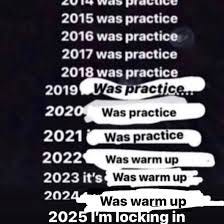
This means it’s important to be picky about the goals we pursue. While it’s lovely to imagine that in 2026 we’ll all get smarter and hotter and healthier and richer and better at our jobs and whatever else people aim for, it’s far more realistic—and therefore achievable—to pick just one of those things.
Scratch that. We should pick a piece of one of those things.
Be specific.
The difference between an intention and a goal is specificity. Intentions are largely vibes-based, while goals are measurable or, at the very least, have a distinct “end.” (This is a good thing. It means you get to pop a champagne bottle or whatever once you reach the finish line—but more on that in a bit!)
Intentions vs. goals:
“I want to write more” → “I want to finish the first draft of my novel.”
“I want to prioritize rest” → “I’m going to reserve two nights to myself each week for restorative activities.”
“I want to save money” → “I want to have [specific dollar amount] in my savings account by the end of the year.”
Again, remember to be realistic about this. Rest is my resolution in 2026, and while right now I feel that two nights a week for myself is not enough, I know even that will be difficult to maintain. Plus, no one’s saying I can’t enjoy three whole evenings to myself if a light week comes my way, and no one’s saying you can’t write or save a little extra if you find yourself with the appropriate resources, either.
Know why you’re pursuing this particular goal.
Are you setting this resolution because you want to, or because you think achieving it will impress someone else? Making other people happy isn’t always a bad thing—see such hits as “quitting cigarettes for your kids,” “starting couples counseling,” and “going to more of your nephew’s basketball games so he knows you love him”—but in many cases, if you’re setting about a goal that you’re totally unenthusiastic about for someone else’s sake, well…
Sorting your potential resolutions into “doing it for me” and “doing it purely for someone else” categories can help you more effectively implement point #1, “be selective.” Again, don’t be a dick or anything; inconvenience is the cost of community, and so on. It’s just something you may want to consider.
Break your goal into manageable chunks.
This is a pretty standard project planning strategy, but when we set lofty New Year’s resolutions, we tend to forget it. Breaking one big goal into several, more stomachable objectives can make the new year feel far less intimidating and help you maintain your motivational momentum. Better yet, it prevents you from falling behind and feeling the pressure to “make up for lost time” toward the end of the year.
If your 2026 resolution is to write the first draft of your novel, it could help to set word count milestones along the way, like 1,500 words per week. Similarly, a savings goal could involve depositing a set amount into your account each month. If you’re trying to get your Etsy or Redbubble store off the ground, a quarterly sales goal might feel more achievable than a big annual one; if you want to learn to cook in 2026, trying a new recipe every Sunday feels more manageable than dominating a whole cookbook by the end of the year.
Celebrate your wins.
It’s so much easier to mourn what we haven’t achieved than it is to celebrate what we have. Maybe this comes from the perception that everyone around us is doing so much better than we are, or maybe we’re just not used to our accomplishments getting much attention. Either way, giving our wins the love they deserve can provide the positive reinforcement necessary to keep going when a goal feels virtually impossible to achieve.
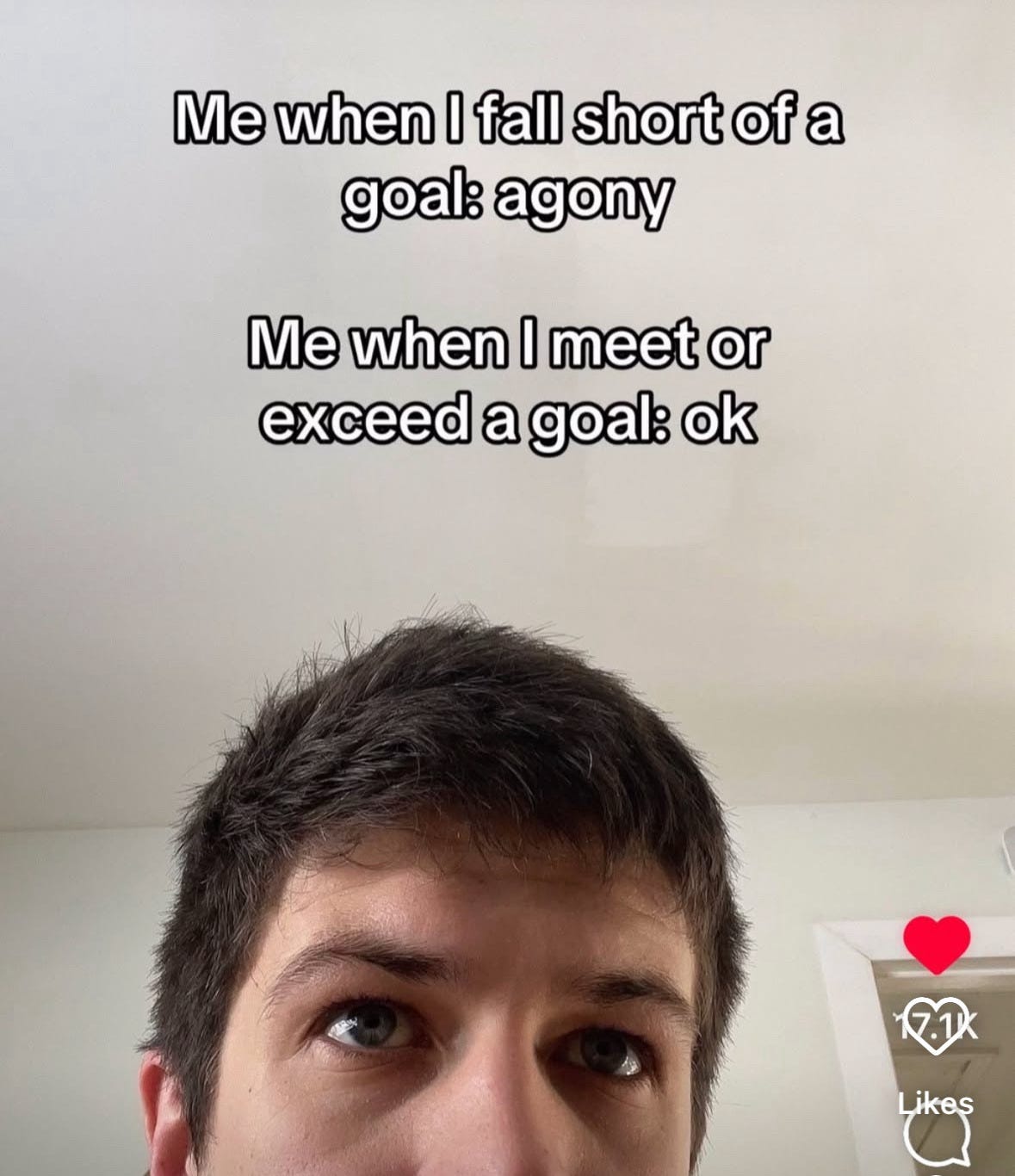
In 2025, I wanted to make exercise a stronger habit, so I told myself I’d work out 300 days out of the year. To track this, I made a cute little chart in Canva that allowed me to fill in a bubble for each exercise day. But to help sustain my excitement, I placed a little star in each 100th bubble, indicating that once I reached it, I’d earn some sort of prize. (I also set some nice-to-have objectives, AKA “bonus goals,” that would earn me five bubbles each; this, I think, helped me feel proud of myself for achieving more specific exercise-related milestones within a far more nebulous goal.)
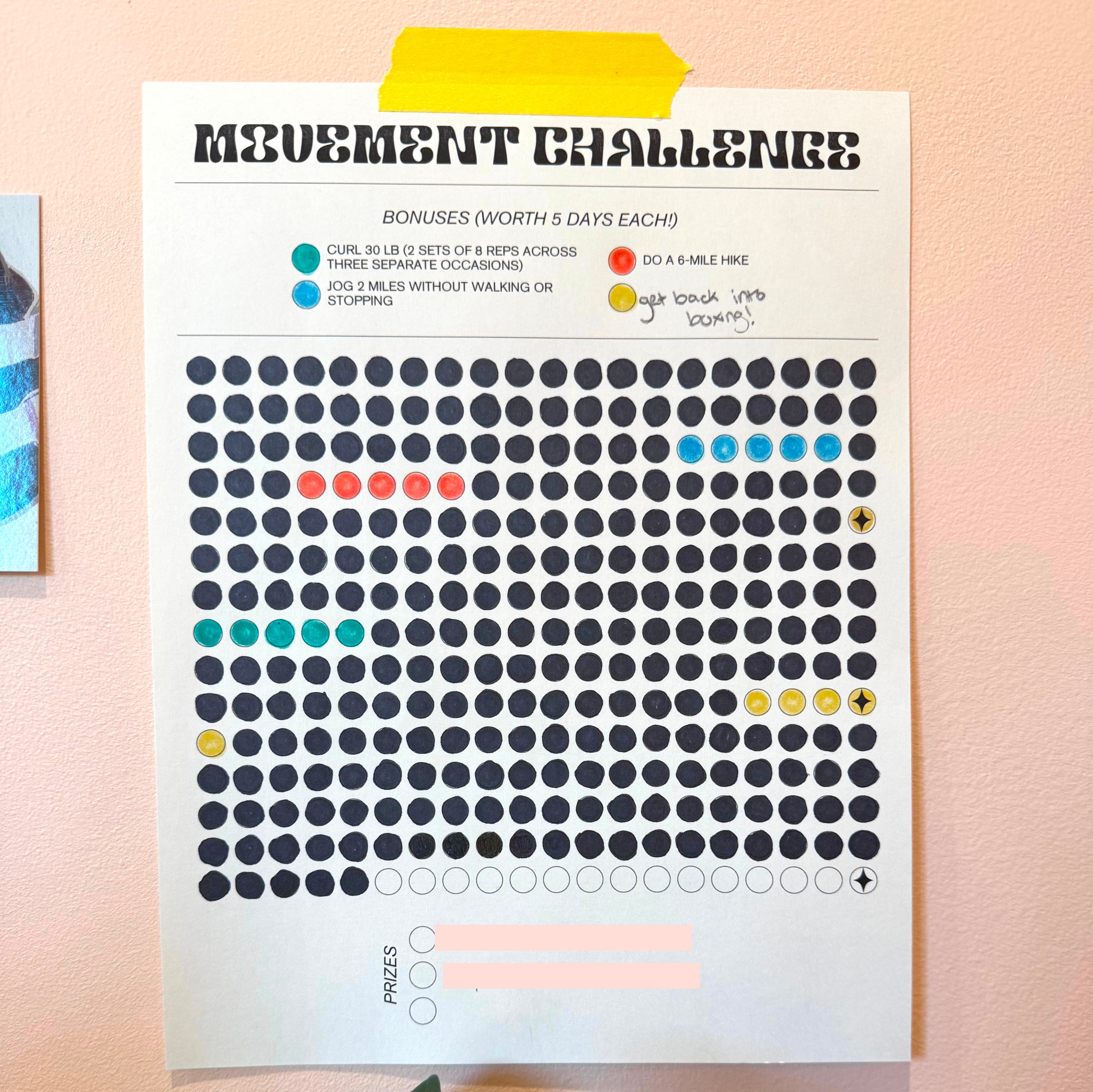
If you do decide to implement a reward system, I suggest offering yourself something that you’d really like, but that isn’t necessarily essential. (Don’t withhold things, add them, or this will become a punishment system, not a reward one.) Rewards don’t have to be material, either! Maybe you and your partner create a lovely at-home date night for every milestone you meet, or you go on a celebratory hike to mark the occasion. More than how it looks or what it costs, it’s important that a prize makes your brain and body feel good.
Know who your supporters are (and aren’t).
My mom recently told me that she has a friend who makes fun of her for maintaining a budget. While she said it was only light teasing, I’m not sure I’d share money-related goals with a person who’s viewed previous iterations of those goals as a joke. Similarly, if I knew people who didn’t take my creative pursuits or personal well-being seriously, I’d probably be tight-lipped about my related resolutions with them, too.

On the other hand, finding people who are supportive of your goals can make achieving them a lot easier. It’s taken me far less effort to write on a consistent basis since I found a group of writers with whom to meet weekly, and because I have parents and a partner who feel strongly about living a financially healthy lifestyle, it’s fun to talk about and celebrate monetary achievements with them. Crucially, these people are also sensitive to my feelings and experiences when I hit a rough patch in either area, which is how I know they’re genuinely supportive.
If you haven’t yet found folks with whom you can talk about your most important goals, it could be worth looking for them online. Discord communities, Reddit threads, Meetup or BFF (formerly Geneva) groups, and even subscriber chats here on Substack can introduce you to some pretty cool people. So can local non-profits, where I’ve seen some wildly specific support groups, or interest-specific gatherings like conferences and markets, if you can afford them.
I hope these tips are helpful! I’m always interested in hearing about other people’s New Year’s resolutions, so if you’d like to share yours below, please do—and I hope your 2026 gets off to a wonderful start!
Have a second for a quick poll?
I love writing thinky, “let’s figure this thing out together”-type posts, but it seems that these kinds of posts are losing favor, while highly personal, blog-style posts are in. Part of me wonders whether this is because the former takes a little more mental work to absorb while “day in the life”/diary entries feel relatively lightweight, and most of us have enough on our minds as it is. But who knows!
Okay yes yes yes to all of this I LOVE a New Years Resolution! Every year I make a new years bingo board made of manageable goals that are still a challenge. My partner and our friends do it together as an accountability group. Once you get a row of accomplished goals, you get a prize. If you get blackout, you get a big prize (I have never gotten blackout lol, but I always almost get it! It makes me excited for the year that I finally accomplish blackout).
With us, the most important thing is that the goals have multiple chances to be achieved. My husband tried to put “PR in the marathon”, but we pointed out that he only does one marathon a year. If he got sick, or had an injury, or for whatever reason didn’t PR, there would be no second opportunity and his chances for bingo and blackout would be gone with months still left in the year.
Wait I love this so much, and hell yeah to moving your body 300 days this year!!! Do you have a link to the Canva art you created? I might copy you in 2026 👀