
Getting over the 'cringe' of self-promotion
Olivia Rafferty, Lori Schkufza, and Joi on how they power through promoting their work

You’re reading Creativity Under Capitalism, a free biweekly newsletter about reclaiming and sustaining creative joy under tricky socioeconomic circumstances. I’m Adrianna, a freelance journalist and creative writer based in Phoenix, AZ.
My debut novella, Those Lights at Night—about a desert town that fakes alien abductions to attract tourists and the suspicious disappearances that send it into a tailspin—is now available in audio and ebook format! If you’re enjoying Creativity Under Capitalism, consider picking up a copy (perhaps as a holiday gift?) or buying me a coffee to make my day!
Note: This issue is a follow-up to “Promoting your own work is embarrassing.” If you haven’t read that one yet, check it out! (Also, my apologies for not offering a voice-over for this issue; I’ve been having tile installed in my house all week, and it is not quiet. 🫠)
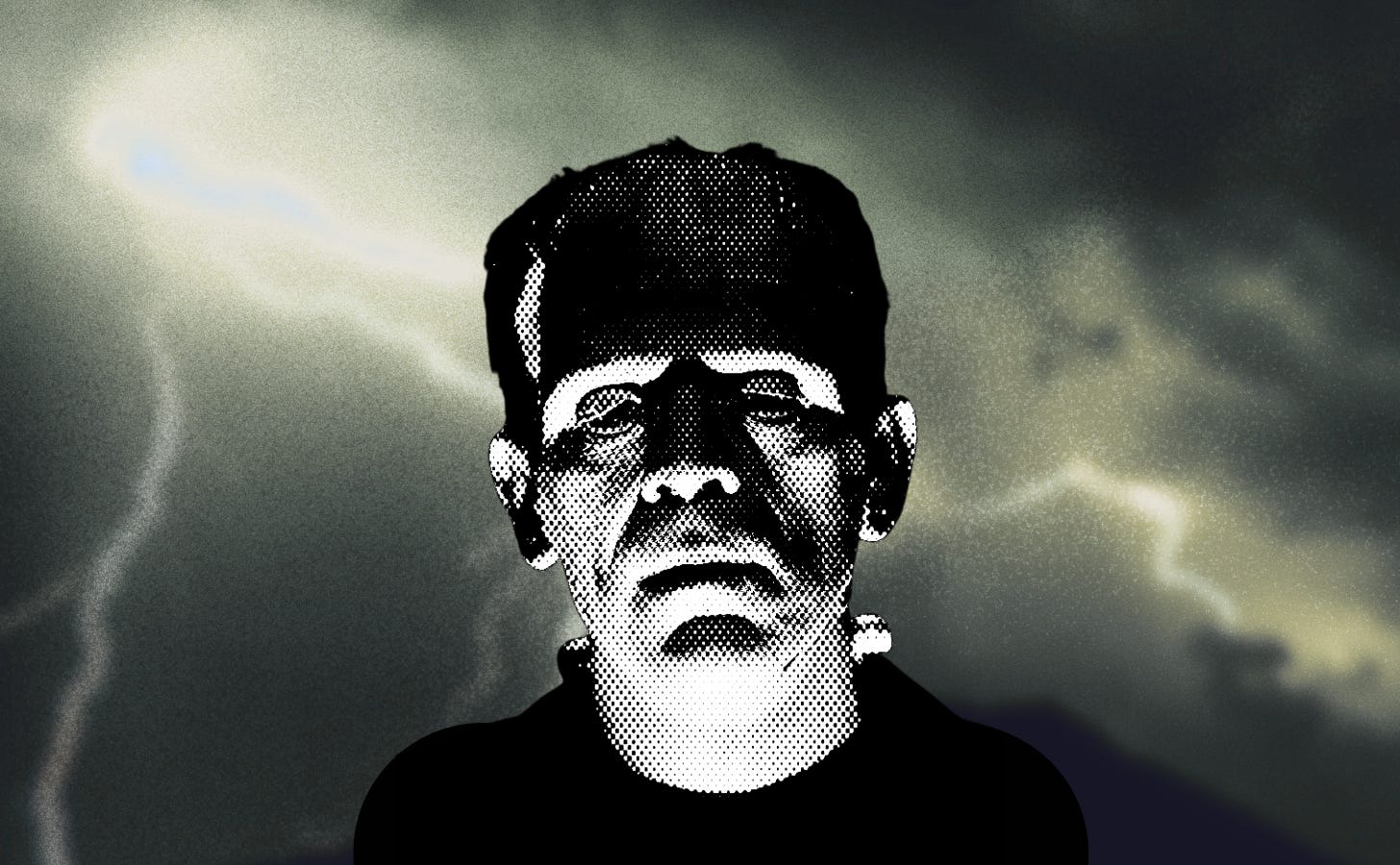
Most of us know the high of beginning a new project, the slog of seeing it through, and the euphoria of finally being able to say it’s complete. But what about what comes after?
When I was in new-author limbo, having signed my publishing contract but still waiting for Those Lights at Night to actually come out, my friends would ask what I was doing to promote my book. Feeling safe in the knowledge that my publishing journey was not conventional whatsoever and literally could not follow the traditional “spend a year pre-release marketing the hell out of this thing” route, I sort of shrugged, saying I was waiting for my “assets”—pretty much just my cover art—to come through before I could sort out an aesthetically consistent social media strategy. (Whoops: Virtually none of what I’ve posted on social media since TLaN’s release has been “aesthetically consistent.”) Though this was a real concern at the time, I was also eager to put off the painful work of self-promotion, which is, as this post discusses, extremely embarrassing.
I’m only a month-ish into this whole “author” thing, and I’m sure that the sheer repetition required of book promo will eventually make me, if not numb to it all, than at least a little more comfortable. Still, I’m a firm believer in learning from other people’s experiences in addition to your own, so I’ve chatted with a few kind creatives about their self-promo ups and downs. Through them, I’ve learned that there are a few mental notes (affirmations?) that make promo easier to swallow.
What you make is a core element of your identity.
“Making the decision to promote yourself sort of comes with the decision to say: I am an artist,” singer-songwriter Olivia Rafferty ✨ told me at the start of a video call about the shame associated with self-promotion.
This proved a common thread throughout our 45-minute conversation. Having published her own music since 2020 and released her first album earlier this year, Olivia now sees marketing as a natural part of the creative process.
But it wasn’t always that way. When she was at university, running a show on the student radio station, she and a bunch of other students decided to facilitate a concert night featuring multiple artists.
“We booked these really big bands. We booked a massive hall. And then none of us wanted to market it. No one wanted to go out on the street and hand out flyers,” she said, laughing. “So it was, like, comically undersold.”
At the beginning of her music career, Olivia felt what many of us feel when we begin to self-promote: that she was being a bit repetitive (to put it mildly).
“When I have something time sensitive like a gig, or I’m running a workshop or something—what is it that people say? You need seven ‘impressions’ of something before you make the decision to engage. And you hear that and go, ‘That doesn’t sound like much,” and then you’re sending out your seventh email and you’re like, ‘Oh my god, this is so overkill.’”
This sense of repetition is something we’ll come back to momentarily, but in the meantime, I found it interesting that the antidote to Olivia’s cringey, am I being annoying? feelings was a strong sense of identity.

“I’ve made a more concentrated effort to tell people, you know, ‘I’m a singer-songwriter, and my day job is blah.’ Like, the artist [identity] comes first,” she told me. “I try to present myself in that way because then people know what they’re getting, and if people see me promote my gig for the bajillionth time, they understand that I’m just doing my thing.”
Because promoting their own work is just something creatives do.
“It’s sort of an internal conscious decision you need to make for yourself,” Olivia said. “You need to choose to see yourself as an artist. When you do that, it makes the job of promoting yourself so much easier, because you’re like, I’m doing my job.
“Give yourself permission to try it on.”
People are forgetful, so repetition is your friend.
Though I can count on two hands the number of times I’ve posted on Instagram about my book since it came out, I can’t help but imagine my followers groaning every time I do. Like, aren’t they tired of hearing about this thing?
Not necessarily. Odds are, they’ve forgotten it exists. And while that might be a bit sad if it applies to your friends or family—whose duty it is, I think, to be hyped about your work—it’s actually a great thing when it applies to random members of your audience, because it means you have permission to be as “annoying” as you want about what you’ve made.
“My career has been predominantly in the freelance sphere, so if there’s no self-promotion, there’s no work,” 2D narrative animator Lori Schkufza told me. “But the level to which I’m doing it has always come with this conflict of, ‘Is it too much?’”
Given the visual and digital nature of her work, Lori largely markets her animations online. With fairly limited avenues, it’s understandable that she sometimes feels like her promo is repetitive.
“I often ask myself, ‘Have I shared this clip too many times in the last 3 months? Do I need to find something else that can also make this point?’ But then you find that there are some things that just resonate with people,” Lori said. “I have this GIF that’s become my go-to, it’s from a small vignette I animated based on the Patterson-Gimlin Bigfoot film. So it’s a GIF of this jaunty Bigfoot waving at the camera with a big smile. People love when I post that. But I worry that he, too, could wear out his welcome one day.”
What prevents Lori from just putting Bigfoot away for good, then?
“I think I stopped worrying so much about how often I was self-promoting with the Bigfoot GIF when I made it a center piece of me as an animator,” she said. “I changed some copy on my website to call it out to the effect of: Big Monsters, Even Bigger Personality.”
So there’s a bit of that whole “identity” thing again.
“I think my balance is accepting that I’d rather post the same clips over and over again and be remembered for that stuff than to worry that I’m being obnoxious and forgettable,” Lori noted. “Someone said, ‘You spent so much time crafting these videos. You’ve earned the excuse to share them as many times as you want.’”
And that’s a perfect segue into affirmation #3, which is…
It’s more about the art than it is about you.
When I was looking at launching my first business in 2018, I asked for advice from a successful entrepreneur I’d once copywritten for.
“How do I tell people about my business without looking sleazy or annoying?” I asked.
“It’s not about you,” she replied. “In the end, it’s about them. You’re solving a problem for them.”
Though art isn’t always utilitarian, it can solve problems. At its simplest, it’s entertainment; at its deepest, it can inform how someone thinks or makes a decision about conflict, perception, or self-fulfillment. Even the art some of us, in our most pretentious moments, consider “lowbrow” can at least solve the problem of what to watch on date night or read while recovering from the flu, but even then, the odds are good that someone has benefited from it in a deeper way.
“When people ask how I am or what I’m doing, I have to remind myself to not talk about something mundane, like the weather,” Joi, a multidisciplinary artist and radio DJ, wrote in response to last month’s self-promo issue. “Talk about the art as much as you can.”
Because at the end of the day, what you’re attempting to sell—socially or in a literal, financial sense—probably isn’t you as much as it is your work. And how can someone know it exists, and therefore determine whether it could possibly fill some gap they’ve identified, if you never talk about it?
But Adrianna, it’s tempting to say in response to my own advice, how can my little book about UFOs and desert ephemera meaningfully solve anyone’s problems?
Ultimately, this isn’t up to me to decide. As an author, it’s simply my responsibility to put the book in front of them so that they can decide whether they want or need it.
“We all want to be demure and a little coy and to come off like it’s effortless. It’s like dating in a way,” Lori told me. “You want to be pursued, but you don’t want to do any of the pursuing. It doesn’t work that way! You’ve got to put yourself out there.”
If I may, I’d like to take Lori’s point a step further by suggesting that it’s less about putting yourself out there than about putting your work out there—and even allowing it to build a life of its own, as Olivia might put it.
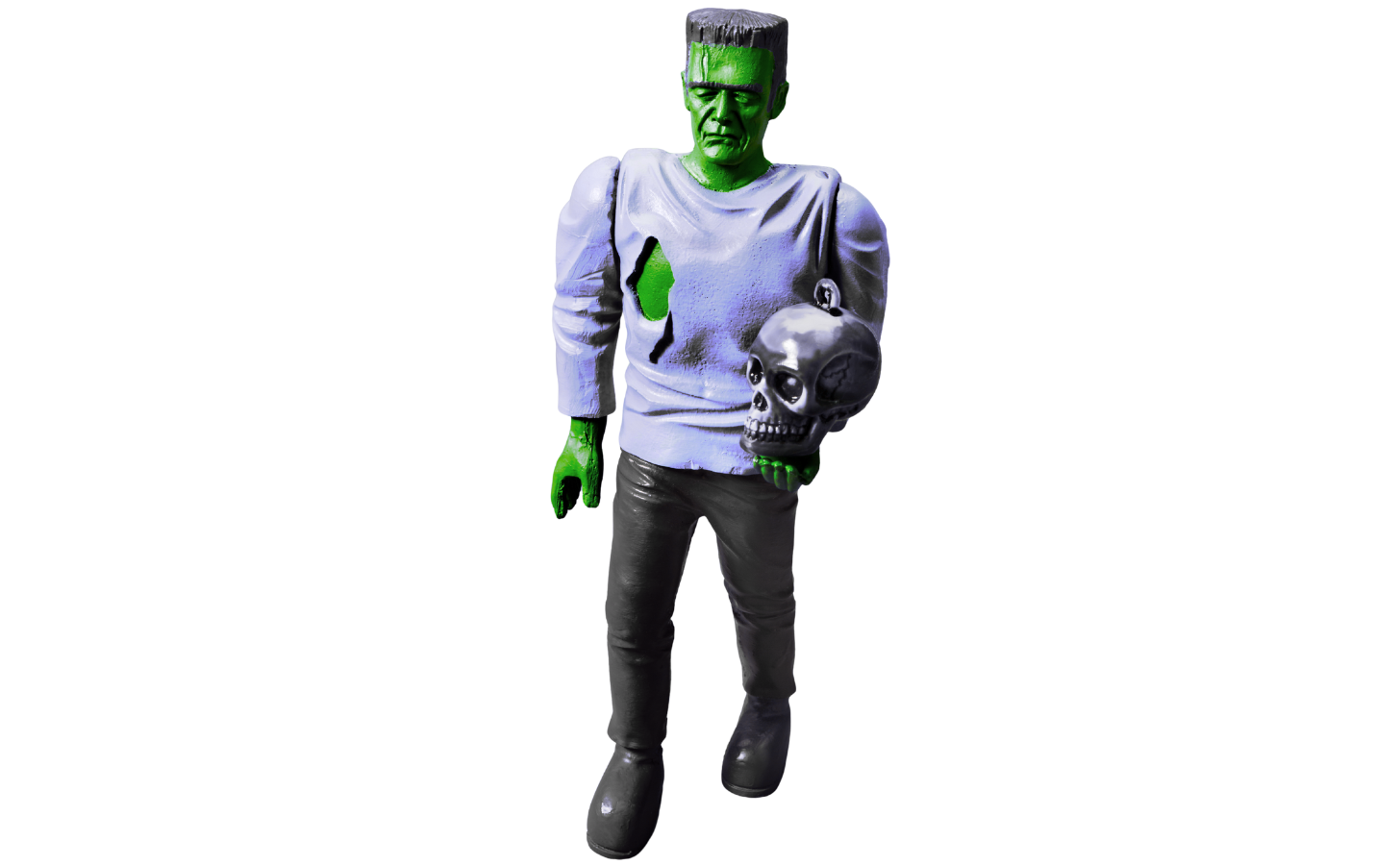
“There are several reasons to promote a work, but first of all, the work is good and it deserves to exist,” Olivia told me. “Like, you just had a baby. It now has to live and go off to school and meet people and, like, it’s its own thing now, separate from you, you just have to nurture it. I just watched Frankenstein the other day. It really upset me to see that [Victor Frankenstein] spent all this time making this thing he’s so proud of, and the second it’s released, he just neglects it. He doesn’t want to nurture it, he doesn’t want to show it to the world. He doesn’t want anything to do with it. You can’t just put all your effort into the exciting research and production phase, you need to teach Frankenstein to read and get him into the world.”
Art can help people untangle mental, emotional, or spiritual quandaries—inward- or outward-facing, known or unbeknownst to them—by introducing perspectives or solutions they might not have thought about otherwise. Who are you to withhold the potential for that to happen, just because you’re sometimes insecure about what you’ve made or how you market it?

What’s been inspiring me lately:
✰ Kyle Paoletta’s American Oasis: Finding the Future in the Cities of the Southwest. I knew I’d love this book when I listened to the intro about how, despite the rest of the United States’ constant demonization of the Southwest, the region is best seen as a foreshadowing of the country’s future (in terms of water access, climate change, and urban sprawl, at least). I also love that Paoletta approached the book as an exercise in understanding where he grew up.
✰ This post by Abigail Monti about writing literary fiction that doesn’t drag.
✰ A newsletter issue by Julie Vick about the things she did to market her book and how well they worked.
✰ Lauren Oyler’s debut novel, Fake Accounts. While I’m not sure I liked the actual plot of this book, the voice pulled me through. Oyler has me thinking a lot about writing with specificity and dry humor, which I’ve always loved but sometimes have a tough time implementing.

Thank you Arianna for including me in this post:) Some great stuff here!
As if my TBR pile couldn't get any bigger, I've added that book on the Southwest to my list!