

Community is not a commodity
When did we start charging people to spend time with each other?

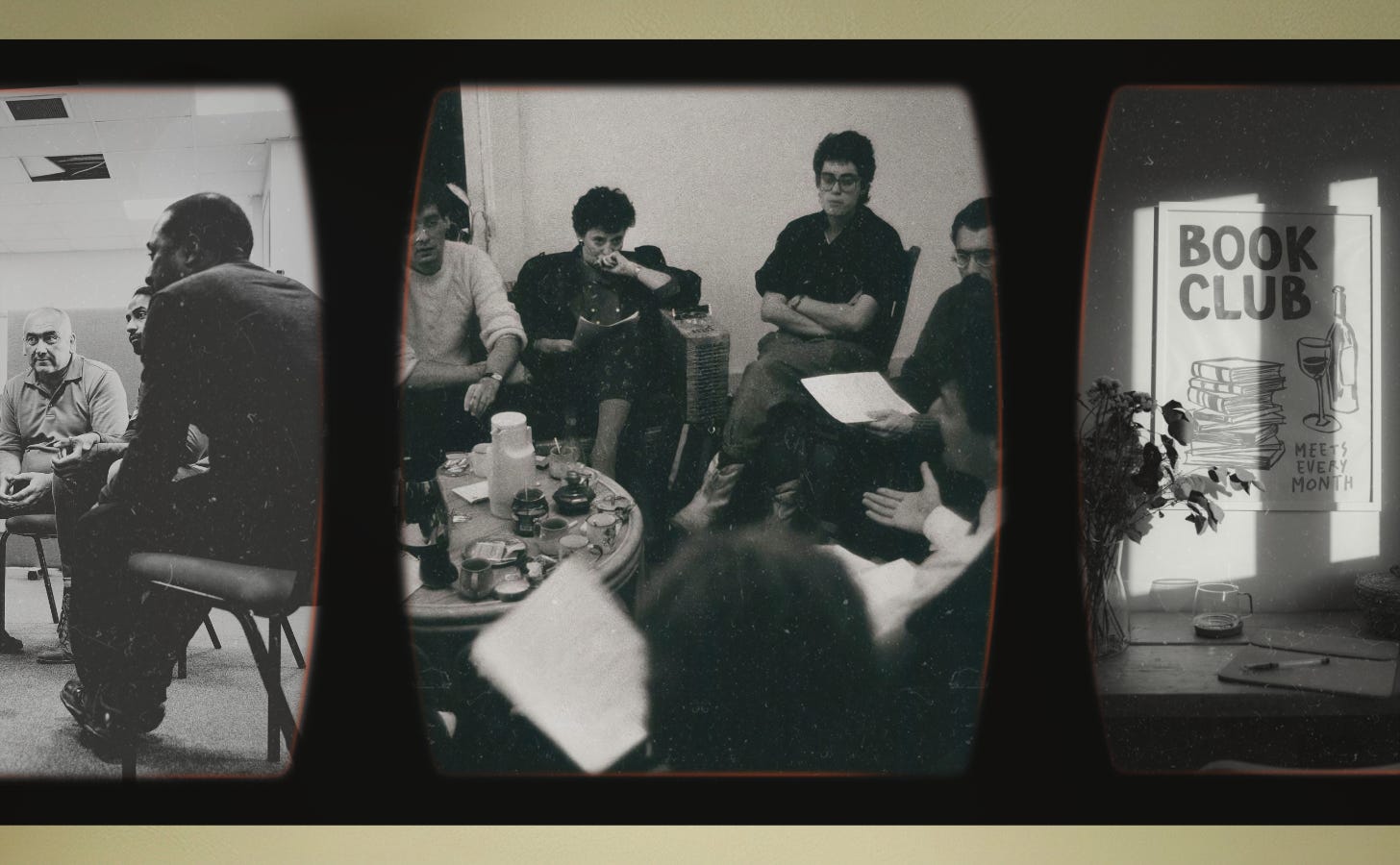
In January I attended my first book club. The host, a friend who is from the generation before mine, piled his kitchen counter with foods from the book we’d read: carne asada fries, General Tso’s chicken, cupcakes, and homemade Rice Krispies bars studded with Lucky Charms.1 Throughout the night he went around the table, offering the dozen-or-so attendees more wine and topping off their water glasses. He even placed a little book flag in his front yard so his house would be easy to find.
I’m certain this was an unusually decadent book club experience (it even featured an appearance from the author, prompting me to joke with my friend that I’ll never attend another book club for fear of disappointment), but after I tucked into my car to head home, I couldn’t stop thinking about how cherished I’d felt throughout the night. It’s possible that my friend is simply an incredible host. More than that, though, I was struck by the feeling that this was a gathering he wanted to put on, not something he was beholden to, like some sort of social chore.
This is not the vibe I tend to get from organized gatherings.
Gatherings-with-a-purpose—group writing sessions, craft nights, wine tastings, board game nights, group hikes, bar trivia—are my favorite kind of gathering to put together. I suspect this is partly related to my social anxiety (having a predefined “reason” to hang out is more approachable to me than a gathering without a plan because I know what to expect), in addition to the fact that I love bringing a bunch of my favorite people under one roof.
For this reason, I can’t help but notice that people increasingly treat gatherings-with-a-purpose as a burden—or, worse, an opportunity to be exploited—when they’re the ones putting them on. An online writing group I attended a few times started charging members for the privilege of joining the organizer on a 1-hour Zoom call (half of which was spent creating asynchronously with the cameras and microphones turned off). A popular book club in my city requires that members pay monthly dues. Artists on Instagram whose work I otherwise admire are charging people to participate in their “pen pal clubs.” A virtual family estrangement support group I found last week won’t let you join their Facebook page until you pay a $30 initiation fee.2 And don’t get me started on so-called “writing retreats” that total far more per person than their accommodations and amenities realistically cost.
Sometimes I see people defend this hyper-transactional charging-to-hang-out model, saying “everyone needs to make a living!!!” or “I’m providing a service” any time someone eyes them suspiciously. But these excuses are so flawed that they’re borderline laughable. No one is making a living by charging a minivan’s worth of adults $5 per month to write on Zoom or swap letters (in this cost of living crisis especially), and the fundamental difference between charging for a service and charging to simply gather is instruction (or a lack thereof). If the organizer of a writing session or craft night3 or support group could be relied upon to offer insight from their own professional or lived experience each time, those gatherings would be called workshops or group therapy, but they are not. (In fact, many of them, support groups especially, have disclaimers assuring attendees that they will not receive professional or personalized advice.)
I’m lucky to have friends who see the intrinsic value in spending time with one another and/or seem happy to go along with my never-ending supply of “no cover” gatherings-with-a-purpose. Nevertheless, I’m bitter about the mounting assumption that it is appropriate to charge people to be community with each other. Whether they’re on Zoom, at a library, or in a church basement, book clubs, writing groups, support groups, and other organized gatherings are time-honored ways to spend one’s time, get to know other people, and build knowledge outside of work or the home. When we charge people to participate in what are ostensibly non-hierarchical gatherings like these, we make the barrier to entry higher while making lasting participation harder to maintain. We also convey a hurtful message: I would not be in community with you if you were not giving me money. In my opinion, this message adds friction to the process of building meaningful relationships with each other. Is that fracturing worth $5?
It’s frustrating that “the loneliness epidemic” can be a buzzword at the same time that people are charging others to do art in the same room or send postcards back and forth. I am a freelancer and an entrepreneur at heart (despite my distaste for the word, given its capitalist weight) and have always been fond of finding creative ways to make money. Never in my life, though, have I thought to charge people for the privilege of spending time with me. That is a particularly nasty type of capitalist conceit.

What’s been inspiring me lately:
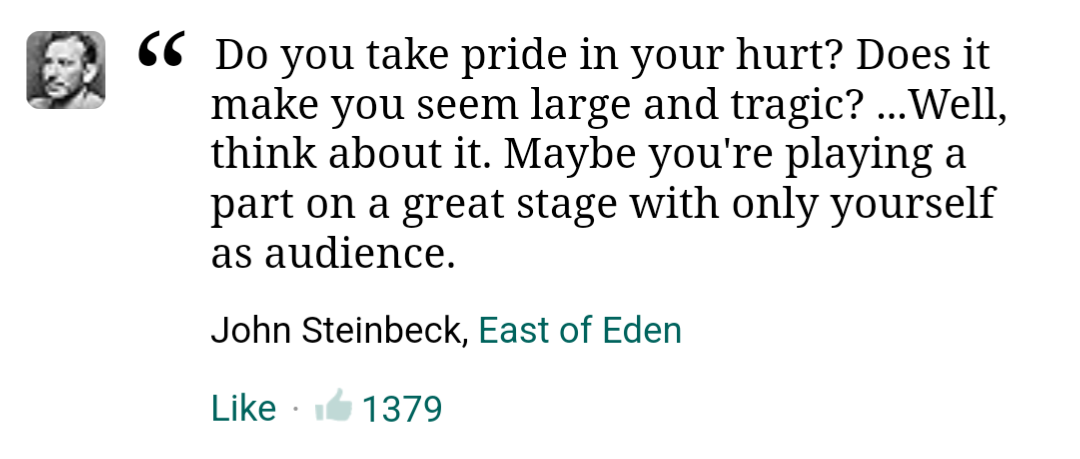
✰ This East of Eden quote. (BTW, have you read East of Eden? Was it worth the 600 pages?)
✰ My Lesbian Novel by Renee Gladman. This is such a fascinating book in both form and subject matter. The narrator is the author herself being interviewed about the creation of her next novel, which she’s writing in real time. I really busted out my annotation stationery for this one! (Also, I bought it at a queer bookstore in Seattle with Auzin Ahmadi—a sweet memory I come back to whenever I open the book 🥹)
✰ Scratchboard art. My partner and I learned about it at the International Exhibit of Nature in Art at the Arizona-Sonoran Desert Museum on Sunday, and we were both amazed at how much texture the material can introduce to what’s still a 2D form. This little fella by Priscilla Baldwin (who I just learned is co-founder of the museum’s Art Institute?!) was my favorite!

This was a delicious book. (And if you buy it through my affiliate link, Bookshop.org will give me and my favorite indie bookstore a small commission at no extra cost to you!)
I’d like to believe this is to deter bad actors from joining for the wrong reasons, but given the overall trend, I feel a little weird about it.
I could forgive a crafting session in which supplies were included in the cost of entry, but in my area at least, attendees are told to bring their own stuff.
Ooooh I'm so torn on this. Sometimes the nominal fee, while not actually helping someone make a living, helps the event itself exist. Like with the event that I hosted, I provided no formal instruction and very little guidance, but all the money from ticket sales went to the venue rental and supplies, and I was still at a net loss of about $200 after all was said and done.
Charging for virtual writing circles/accountability is so tricky. Virtual writing communities seem to really work for some people -- it's about a 5/10 for me. I no longer wish to pay for virtual writing classes or accountability groups because it's just not worth it for me personally.
But I get that what you're talking about isn't individual preference, it's the normalization and expectation of charging money for the basic human right to community. And, of course, that's a byproduct of the stage of capitalism we're in, which refuses to let anything free and cool exist. I think one solution is for amazing people like you to keep hosting free community events that have deep, inherent value to both the hosts and the attendees.
Sidenote, I've never heard of scratchboard art either and it seems so cool!
This nails something I've been trying to articulate for months. The moment we put a price tag on showing up, we've already shifted from building relationships to performing transactions. I've seen book clubs morph into networking events once fees enter the picture, and the energyis just diff. People start calculating ROI on their attendance rather than just being present.